Introduction
Every time I actually attempted it, I got quite irritated since my thoughts never really stopped. Rather than feeling rather peaceful, I actually felt quite off track and very impatient. This was why I pretty much convinced myself that meditation “just wasn’t for me.” I assumed that people who really got into meditation quite easily were naturally much calmer, whilst my mind just seemed too overactive and restless – to ever benefit greatly from the practice itself.
Over the course of many years, however, I started hearing all sorts of things on how meditation could genuinely enhance our ability to concentrate, develop better emotional control, manage stress so much better, and even raise our level of self-awareness. Finally, I decided to approach it differently – instead of thinking of it as something I had to get perfect right away, but more like a practice for learning how to take things one step at a time and be a lot more aware of myself. That real change completely altered everything.
I came to understand that meditation isn’t actually about eliminating your thoughts altogether; it’s more about figuring out how to notice them all – without getting way too overwhelmed by them. The more I practiced the more I noticed some subtle yet quite significant changes in my daily routine. I felt much calmer during those super stressful situations, a lot more present in conversation and also far better equipped to handle my emotions without overreacting totally. Meditation really started to become less of this regular exercise and more of a special tool for achieving that inner peace and sharper mental clarity itself.
Table of Contents
Understanding What Meditation Really Is
One of the biggest misconceptions I had about meditation was thinking that it meant “thinking about nothing”. Due to that idea whenever a thought appeared in my mind I considered it a failure. However, as I studied more about meditation, I came to understand that thoughts are quite normal indeed. Meditation isn’t really about pushing the mind to remain utterly empty – it’s all about developing awareness of what’s going on internally without always reacting to it continuously.
This new understanding drastically altered my relationship with meditation. Rather than resisting my thoughts I started watching them instead. I observed just how frequently my mind would jump from one worry to a memory, plan, or distraction. Meditation greatly helped me perceive these patterns without immediately getting lost in them all the time. Over time, this awareness expanded far beyond meditation sessions themselves – into everyday life itself. I became much more conscious of just how my thoughts affected my emotions, reactions, and choices itself.
Meditation even taught me that awareness itself holds quite a bit of power indeed. Simply noticing my thoughts without making judgments created space between my mind and my reactions all the time. That extra space made it a lot easier to stay calm, focused, and emotionally very well-balanced indeed. Understanding meditation this way took away a great deal of unnecessary stress and pressure – allowing me to approach the practice with so much more patience and an open mind itself.
Using Breath Awareness to Calm the Mind
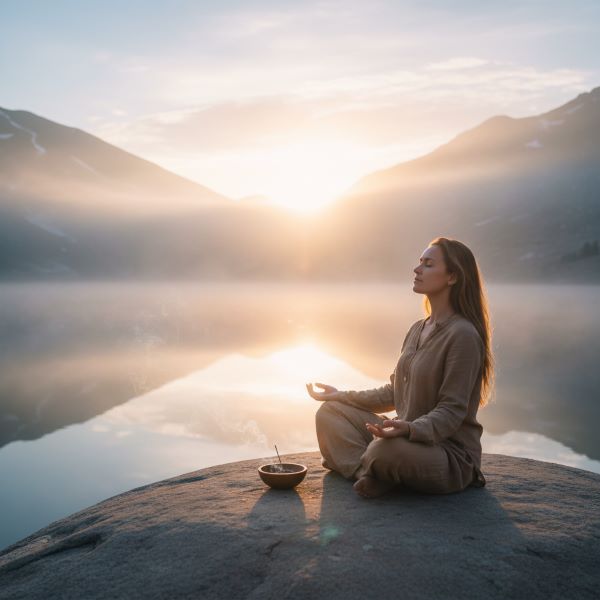
One of the very first meditation techniques really helping me out was breath awareness itself. Initially, it looked almost way too straightforward to be truly effective. I’d sit still, quietly and concentrate on the feeling of breathing. Air entering and leaving my body, the movement of my chest rising and falling or the beat of every inhale and exhale. Yet I rapidly saw that simplicity was just what made this method very effective indeed.
Whenever my mind drifted off, concentrating on my breath provided a relatively steady point of attention for me to get back to. I realized that my breathing quite frequently mirrored how I was emotionally doing. In really stressful moments, my breathing turned shallow and stiff. By taking some time to slow down and focus more intently on my breath, I could little by little soothe my anxious nervous system and build a sense of equilibrium itself.
Over time, breath awareness really became something I utilized outside regular meditation practice itself as well. During intense arguments, really hectic workdays, or instances of anxiety, I began consciously returning to my breathing. It turned into a rather simple yet pretty reliable method of grounding myself in the here and now. This technique showed me that achieving inner peace doesn’t always need sudden huge changes – sometimes it starts with something really fundamental like focusing all my attention onto a single breath itself.
Practicing Mindfulness in Everyday Life
Prior to meditating, I often lived life quite mechanically – I’d snack whilst swiping through my phone, consider work problems whilst chatting with people, or fret about what’s to come while trying to truly appreciate my current moment. My focus was really splintered all the time. Meditation introduced me to a sense of mindfulness – which ever so gradually altered how I actually experienced even the most everyday moments.
Mindfulness taught me to focus entirely on whatever I’m doing at any given moment in the present time frame. Whether I’m strolling, eating, listening or merely sitting very still the mindfulness really encourages presence of mind (awareness) instead of drifting off (distraction). Initially this seemed incredibly challenging since my mind was so used to juggling multiple tasks and constant stimuli. Nevertheless, with regular practice I began observing things I had previously totally overlooked.
Really simple experiences took on a lot more significance. Conversations really felt much deeper since I was finally actively listening instead of mentally readying my responses. Meals became more savored because I was actually concentrating on taste and texture instead of consuming them rather quickly. Mindfulness kind of reminded me that life happens right in the present moment – not in our seemingly endless mental preoccupations. This awareness really created even more serenity, gratitude, and clarity in my daily existence.
Learning to Observe Emotions Without Reacting
One of the most valuable lessons a meditation taught me was how to observe my emotions without reacting immediately to them. Before meditation emotions usually controlled my behavior all too well. If I was stressed, frustrated, or anxious, I’d react very quickly indeed – without really stopping to think about what I was feeling.
Meditation really helped me slow down enough to feel my emotions arise. Rather than instantly acting out I started asking myself things like “Exactly what am I actually feeling right now?” and “Why is this affecting me so intensely?” This self-awareness produced a lot of emotional distance – making it significantly easier for me to react much more calmly – rather than acting on impulse.
Eventually, I understood that emotions are only transient experiences – never a fixed part of who we are. Meditation really showed me that I don’t have to get totally overwhelmed by every single emotion that pops up. I could identify emotions, learn a thing or two from them, and just let them pass – without ever really letting them take over my mindset or behavior. That level of emotional clarity improved both my own relationship with myself and how I interacted with the people around me.
Using Guided Meditation for Focus and Relaxation
When I began meditating, I really had trouble maintaining consistency – sitting alone with my thoughts was quite daunting. Guided meditation really helped me out during those early days. Listening to someone very calm lead me through breathing, visualization or relaxation exercises made the whole process seem much more accessible – and a lot less intimidating.
Guided meditation kept me on track because it gave my mind something nice to stick with. Instead of constantly thinking about whether I was ‘doing meditation just right’, I could just listen and participate. This reduced pressure really made it much easier to relax – and stay present – during each session.
Over time, guided meditations also led me to all sorts of different meditation styles – body scans, gratitude practices, visualizations exercises, and even loving-kindness meditation. Each method produced a completely different experience, which let me discover what truly worked best for me. Guided meditation became a super supportive starting point that gradually helped me develop confidence – and consistency – in my own practice.
Creating a Consistent Meditation Routine
One of the biggest obstacles I met with meditation was consistency. Much like most other habits, it was very easy to practice when I really wanted to and pretty easy to neglect whenever life got really hectic. At the beginning, I thought I really had to have some rather lengthy meditation periods for them to make much sense – and this often made the whole process seem quite hard to keep up with.
Later on I saw that consistency really mattered way more than how long you sat there. Even just five or ten minutes of meditation every day gave me quite some noticeable benefits over time. Rather than aiming for perfection all the time, I concentrated on building a rather realistic plan that fitted quite naturally into my daily calendar.
I also learned just how important it is to link meditation to your current daily habits. Sometimes I would sit down to meditate early in the morning, while at other times I’d do it right before bed so as to calm my head a bit. Making a regular plan really made meditation feel less like another task – and more like just one more normal part of my daily self-care activities. In the end, sticking with it let the actual benefits of meditation become way deeper and considerably more noticeable.
Reducing Stress and Mental Overload
Life today really gets our minds racing all the time. Constant alerts, duties, information overload, and an ever-present sense of pressure create this feeling of total mental burnout. Meditation turned out to be pretty much the only thing that let my mind finally take a break rather than continually soaking up stimuli.
I noticed that regularly practicing meditation decreased the overall impact of daily stress levels. Concerns that used to feel extremely emotionally overwhelming were now so much easier to deal with since my mind seemed far less reactive. Meditation didn’t eliminate all responsibilities, though – it just drastically altered how I reacted to them.
One of the biggest pluses was learning how to put your brain on ‘pause’. Rather than rushing instantly from one job or worry to the next, meditation really taught me how to slow down and reset. That extra bit of mental space seriously improved my concentration, patience, and overall emotional equilibrium. Over time, meditation turned into even less about running away from stress itself and much more about creating healthier ways to cope with it.
Discovering Inner Peace Through Self-Awareness
Meditation created something precious for me – an enormous amount of self-awareness. Before meditating, I frequently acted on habits, feelings, and quite automatic reactions – largely unaware of the ‘why’. Meditation really pushed me to examine my thoughts far more honestly.
As I gained more self-awareness, I began seeing patterns in my thoughts, fears, habits, and all my actions. Some of these realizations were quite uncomfortable at first – yet they were very precious indeed. Self-awareness gave me the power to make much more deliberate decisions rather than constantly reacting so automatically.
Inner peace, I eventually saw, doesn’t come from trying to control everything surrounding me all the time. It arises from understanding myself profoundly better and forming a somewhat calmer connection with my own mind itself. Meditation helped me grow less controlled by all that chaotic external stuff because I was establishing a lot more stability inside. That feeling of inward clarity gradually affected almost every area of my life.
Conclusion
Exploring meditation has changed everything – it has transformed how I face stress, emotions, my concentration span, and self-awareness itself. What began out of mere curiosity turned out to be one of the really valuable tools for personal development within my life itself. Meditation really taught me that peace isn’t something you find externally – but rather, it’s a thing that you learn to foster within yourself by using awareness, patience, and consistent practice.
In my experience, meditation is really not about getting perfect or wiping out all of those pesky negative thoughts. It’s about learning how to gradually slow down, witness your internal world more vividly, and react to life with so much more serenity – and purpose. Through conscious breathing, mindfulness, observing your emotions, and being consistent, I’ve found out that even the smallest moments of stillness really can make a very significant difference over time. Meditation always reminds me that real clarity and peace aren’t elusive targets far off in the distance – they’re practices that we can truly come back to almost every single day itself.
FAQs
Q1: Do I need experience to begin meditating?
A1: No. Meditation is very beginner-friendly indeed – and just about anyone may get started with simple breathing or mindfulness exercises right away.
Q2: How long should I meditate every day?
A2: Even just a few minutes (5-10 each day) will offer quite noticeable benefits indeed. Consistency really counts way more than sitting still for longer periods of time.
Q3: Is it normal for my mind to wander during meditation itself?
A3: Yes indeed! Wandering thoughts occur all the time. Meditation is about rather kindly redirecting your focus once again – without any kind of judgment at all really.
Q4: Can meditation actually decrease our levels of stress and anxiety itself?
A4: Yes. Meditation will help soothe your nervous system, make you a lot more aware emotionally – and even reduce that feeling of total mental overwhelm we sometimes experience.
Q5: What’s the most effective form of meditation for complete beginners really?
A5: Breathing awareness techniques and even guided meditations are often easier and a lot more straightforward places to start for people who’ve never tried it before.