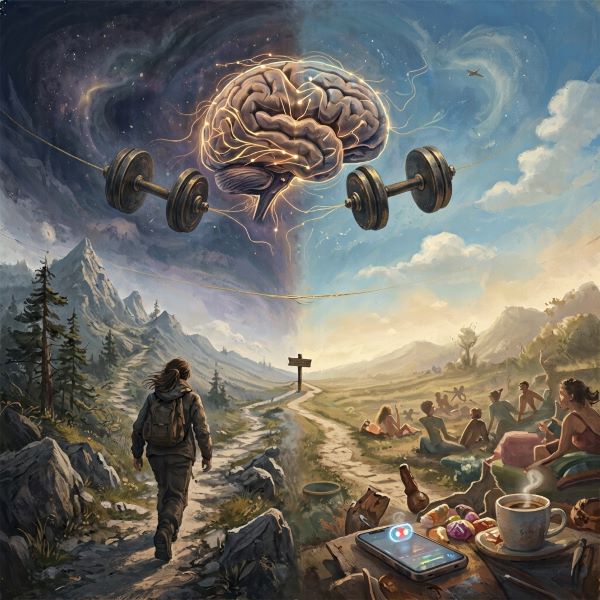
Self development

Embark on a journey of self development with the help of real-life accounts and some recommendations. This blog covers different approaches of improving your personal and professional life such as learning new things and maintaining positive attitude. Find out ways in which you can overcome all obstacles, be able to unlock yourself so that you develop continuously and what you can do to have everlasting fulfillment.

Creating a Personal Mission Statement: Defining Your Life's Purpose

Creating a Personal Mission Statement: Defining Your Life’s Purpose

For a very long time, I really believed that having a purpose meant discovering just that one truly exceptional thing I was meant to accomplish with my life. I often pictured that someday I’d finally grasp exactly what I was meant to do – and from then on, every choice would become crystal clear. Real life proved to be far less dramatic. I had many different objectives, duties, hobbies, friendships, and career aspirations – yet they rarely all pointed in the exact same direction at once. At times I worked incredibly hard towards something only to discover later that achieving it didn’t quite bring me the fulfillment I had hoped for. Occasionally, I even found myself agreeing to new opportunities mostly because they seemed highly regarded by others or appeared very impressive indeed. In due course, I began asking myself a much more practical question: instead of trying to locate that ideal single purpose, could I actually create my own set of guiding principles for my life? Asking this question really led me to explore the concept of creating a personal mission statement.

A personal mission statement is essentially a brief expression of the core values, top priorities, and underlying principles that I aspire to live by each day. I don’t see it as some sort of strict agreement dictating every single future move. Rather, I consider it a kind of spiritual compass. A compass doesn’t give away your entire itinerary, but rather helps you know if you’re heading in roughly the right direction. My personal mission statement serves as a gentle reminder of what counts most often when there are many demands vying for my time and energy.

Creating a Personal Mission Statement: Defining Your Life’s Purpose Read More »

Emotional Detox: Letting Go of Negative Emotions

Emotional Detox: Letting Go of Negative Emotions

For a very long time, I greatly underestimated just how much emotional weight I was lugging with me every day – and then taking on again each new day. I’d simply go about my regular daily tasks, complete all my duties, chat with people, and seem perfectly okay, all the while carrying deep-seated frustration, resentment, disappointment, guilt, fear, or sadness hidden beneath my exterior. The odd thing about negative emotions is they don’t always require our immediate attention right away. Occasionally they build up very quietly indeed. A difficult conversation would linger in my head for many days. An error made years back would still bring me a great deal of embarrassment whenever I recalled it. Somebody’s hurtful behavior would develop into long-held resentment – which I carried around a lot longer than the actual event itself had ended.

I started looking at this whole process like an emotional detox – not like some sort of magic trick to get rid of any uncomfortable feelings instantly, but rather as a deliberate effort to acknowledge, work through, and gradually let go of the emotional ‘baggage’ that wasn’t serving me anymore. I discovered that the negative emotions themselves weren’t necessarily the problem. Anger could actually tell me that someone had crossed a line. Sadness showed me things really mattered quite a bit. Fear warned me about potential risks or uncertainties. Guilt really motivated me to fix behavior patterns that didn’t align with my personal values. However, problems arise if I got stuck within those emotions – rather than truly learning from them and ultimately letting them fade away naturally.

Emotional Detox: Letting Go of Negative Emotions Read More »

Finding Inner Strength: Tapping into Your Resilience

Finding Inner Strength: Tapping into Your Resilience

At times in my life, I really felt swamped by challenges – they just seemed way out of reach for me. Whenever I’d face personal setbacks, experience professional disappointments, go through unexpected life changes, or deal with periods of self-doubt, I frequently asked myself if I had enough strength to just keep going. During those tough seasons, I truly thought resilience belonged to special people – ones who appeared incredibly brave, emotionally steady, and naturally upbeat all the time. I assumed some folks were basically born tougher than everyone else. As time went on though, life actually gave me a much different lesson. I saw that resilience isn’t the lack of hard struggles, fears, or pains at all. Rather, it’s our capacity to carry on moving forward – even while feeling all those intense emotions.

Finding Inner Strength: Tapping into Your Resilience Read More »

The Art of Active Listening: Improving Your Conversations

The Art of Active Listening: Improving Your Conversations

For a long time, I thought getting better at communicating really meant learning to talk more assertively, express my thoughts much more clearly – and always find just the right words for each conversation. Whilst these abilities are certainly vital, I ultimately found out that the key element of communication actually has very little to do with speaking at all. It has lots to do with listening. I realized that quite a few of my chats weren’t quite as significant as they really could’ve been since I’d so often be listening with the goal of responding instead of really getting it. Occasionally I’d get ready mentally with my reply while the other person was still talking. At times I’d assume I’d already grasped their point even before they’d even completed explaining it. Although I never really meant to dismiss individuals, I gradually saw that hearing someone and truly listening to them are literally two completely different activities altogether.

The Art of Active Listening: Improving Your Conversations Read More »

Strengthening Willpower: Techniques for Staying on Track

Strengthening Willpower: Techniques for Staying on Track

I’ve had lots of occasions throughout my life where I really wanted to reach a target – only to discover myself having trouble staying consistent once the initial rush wore off. If I decided to get fit by exercising regularly, eat better, save cash, start learning something new, or finish off an essential project, I usually started out with loads of energy and confidence. It all seemed quite straightforward for a couple of days or several weeks. However, then there were diversions everywhere, temptations got even stronger, and my motivation started wavering more often. When this happened, I saw that reaching long-term success really needs more than just our initial drive. It demands our willpower – the capacity to keep going towards your most important goals even if it’s hard work or very uncomfortable indeed.

After some time passed, I discovered that willpower isn’t simply something we’re either naturally gifted with or not (a certain ‘type’ of person). Rather, it’s a skill that you can develop over time, build up, and support via deliberate practices and strategies every day. People who really seem very self-controlled aren’t always driven by constant motivation themselves. Actually, they typically set up systems, establish daily routines, and develop mental attitudes that make making good choices much simpler to hold onto. By understanding this concept a bit better, it completely altered my approach to self-improvement. As opposed to beating myself up whenever motivation left me, I started concentrating more on building up my capacity to stick with things regardless of how I actually felt in each moment. Here in this article, I’d like to delve into some real-world methods that have really helped me increase my willpower further, enhance my self-control, and stick with my objectives – even during really tough periods itself.

Strengthening Willpower: Techniques for Staying on Track Read More »

The Benefits of Lifelong Learning: Embracing Continuous Education

The Benefits of Lifelong Learning: Embracing Continuous Education

One of the most valuable things I’ve learned about our own development is that your education really shouldn’t ever finish with formal school days over. For quite a long time, I saw learning mainly associated with classrooms, tests, degrees, and certifications. When all those stages were done, it kind of felt like most of my learning was also done. However, life finally showed me something very different indeed. The world changes all the time, technology evolves incredibly fast, whole industries get transformed, and loads of new opportunities show up almost every year. So as to stay flexible, self-assured, and satisfied, I discovered that you really have to keep on learning – a lifelong habit rather than just a short-term thing. People who keep growing are frequently those who stay curious, open-minded, and eager to learn right through their lives.

What really makes lifelong learning so effective is that it goes way beyond just professional success itself. Although ongoing education will definitely help with your job prospects and your bank balance, its effects touch upon nearly every part of life. Learning new techniques, investigating completely unknown subjects, building on your existing habits, and getting new viewpoints can greatly enhance your self-confidence, creativity, problem-solving capabilities, connections with others, and even your total sense of well-being. I’ve discovered that embracing lifelong learning gives you a sense of purpose since it reminds me that there’s always room for improvement – regardless of how old you are or how much experience you’ve got. Rather than feeling held back by what I currently know, I get very excited about all that I still have the chance to find out. Here in this article, I’d love to delve deeper into the numerous benefits of lifelong learning and why continuous education might just be one of the best investments we ever make in ourselves.

The Benefits of Lifelong Learning: Embracing Continuous Education Read More »

Exploring Meditation: Techniques for Inner Peace and Clarity

Exploring Meditation: Techniques for Inner Peace and Clarity

Every time I actually attempted it, I got quite irritated since my thoughts never really stopped. Rather than feeling rather peaceful, I actually felt quite off track and very impatient. This was why I pretty much convinced myself that meditation “just wasn’t for me.” I assumed that people who really got into meditation quite easily were naturally much calmer, whilst my mind just seemed too overactive and restless – to ever benefit greatly from the practice itself.

Over the course of many years, however, I started hearing all sorts of things on how meditation could genuinely enhance our ability to concentrate, develop better emotional control, manage stress so much better, and even raise our level of self-awareness. Finally, I decided to approach it differently – instead of thinking of it as something I had to get perfect right away, but more like a practice for learning how to take things one step at a time and be a lot more aware of myself. That real change completely altered everything. I came to understand that meditation isn’t actually about eliminating your thoughts altogether; it’s more about figuring out how to notice them all – without getting way too overwhelmed by them. The more I practiced the more I noticed some subtle yet quite significant changes in my daily routine. I felt much calmer during those super stressful situations, a lot more present in conversation and also far better equipped to handle my emotions without overreacting totally. Meditation really started to become less of this regular exercise and more of a special tool for achieving that inner peace and sharper mental clarity itself

Exploring Meditation: Techniques for Inner Peace and Clarity Read More »

Navigating Life’s Transitions: Strategies for Smooth Changes

Navigating Life’s Transitions: Strategies for Smooth Changes

Life really doesn’t stay the same for very long time after time. At quite a few points in my life, I’ve seen changes happen that completely changed my schedules, outlook, and perception of stability all at once. A few transitions were quite exciting, such as beginning a whole new opportunity or entering a new phase of personal development. Others were very hard and utterly unexpected, forcing me to adjust a lot sooner than I really felt prepared. No matter what kind they took, one thing became really clear to me over time: transitions are absolutely inevitable. Change is part of life – whether we actually plan it ourselves or not at all.

For a rather long time, I really wrestled with transitions since I saw them more as problems rather than chances. I truly craved certainty, familiarity, and total control. Anytime something changed, I would often think a lot about what I was losing rather than what I might gain. My mindset really made transitions seem much weightier and even more stressful than they truly needed to be. But through experience, some reflection, and a ton of personal growth, I began to approach change in an entirely different way. I finally started to see that transitions aren’t just endings – they’re also beginnings itself. They put us to the test, transform us all over again, and sometimes really show us our inner strengths we never knew we had. Learning how to get through transitions much smoother became one of the most useful self-growth skills I’ve ever managed to develop.

Navigating Life’s Transitions: Strategies for Smooth Changes Read More »

The Power of Laughter: Using Humor to Enhance Your Life

The Power of Laughter: Using Humor to Enhance Your Life

For quite some time now, I really underestimated just how significant a part laughter played in my life itself. I would see it as a very casual thing, something that happened during times of entertainment, social gatherings or everyday chatter. It didn’t seem like something tied to the personal development or a self-improvement itself. I was way more focused on self-control, being productive and setting serious goals. In my mind, improving myself required hard work, strict schedules, and a lot of concentration. Laughter seemed like a nice break from that – not something that would actually help with it. But over time, I really began noticing something quite interesting indeed: the moments when I laughed much more were also the moments when I really felt more carefree, more inspired, and more genuinely connected to other people.

As I looked closer, I eventually realized that laughter wasn’t all just a simple reaction – it was actually a helpful tool. It had the power to totally change my outlook, lower my stress, and adjust my thinking in ways that nothing else ever could. When I finally began to really make an effort to put humor into my life, I really noticed improvements not only in my emotional state but also in how I managed obstacles. My problems didn’t feel so out of control, my conversations became much more natural, and even quite difficult situations really became easier to handle. Laughter didn’t replace hard work or self-control, but it really enhanced them a lot. It added balance to my life, reminding me that growth doesn’t always have to be super tough – it can also be quite light, adaptable, and even really fun itself.

The Power of Laughter: Using Humor to Enhance Your Life Read More »

Practicing Altruism: Finding Joy in Helping Others

Practicing Altruism: Finding Joy in Helping Others

For quite a while now, I’d really considered personal development as a very personal affair indeed. I concentrated on enhancing my behaviors, building my willpower, making plans, and working towards my personal achievements. All of which were really valuable – yet something always seemed somewhat short of complete. Regardless of all the progress I made on my own, there were times when the satisfaction just didn’t last quite as long as I really anticipated. It felt like something was missing – something beyond personal achievement. That’s when I started exploring the idea of altruism, not as some major act of selflessness, but as a rather simple and consistent habit of helping others.

At first, I didn’t really expect much from it myself. I reckoned helping others would be quite beneficial, yet I really hadn’t realized how deeply it would affect my attitude. The more often I was involved in doing little deeds of kindness – offering aid, listening more closely, or just really being present – the more I observed a change in how I truly felt. There was a feeling of fulfillment that was distinct from my personal successes. It felt a lot more long-lasting, a lot more meaningful. I started to really grasp that altruism isn’t merely about helping out others – it’s also about redefining the way we really see both ourselves and our world. Helping others really did become an extremely important part of my self-improvement process itself.

Practicing Altruism: Finding Joy in Helping Others Read More »

Scroll to Top