Self development

Embark on a journey of self development with the help of real-life accounts and some recommendations. This blog covers different approaches of improving your personal and professional life such as learning new things and maintaining positive attitude. Find out ways in which you can overcome all obstacles, be able to unlock yourself so that you develop continuously and what you can do to have everlasting fulfillment.

Exploring Meditation: Techniques for Inner Peace and Clarity

Exploring Meditation: Techniques for Inner Peace and Clarity

Every time I actually attempted it, I got quite irritated since my thoughts never really stopped. Rather than feeling rather peaceful, I actually felt quite off track and very impatient. This was why I pretty much convinced myself that meditation “just wasn’t for me.” I assumed that people who really got into meditation quite easily were naturally much calmer, whilst my mind just seemed too overactive and restless – to ever benefit greatly from the practice itself.

Over the course of many years, however, I started hearing all sorts of things on how meditation could genuinely enhance our ability to concentrate, develop better emotional control, manage stress so much better, and even raise our level of self-awareness. Finally, I decided to approach it differently – instead of thinking of it as something I had to get perfect right away, but more like a practice for learning how to take things one step at a time and be a lot more aware of myself. That real change completely altered everything. I came to understand that meditation isn’t actually about eliminating your thoughts altogether; it’s more about figuring out how to notice them all – without getting way too overwhelmed by them. The more I practiced the more I noticed some subtle yet quite significant changes in my daily routine. I felt much calmer during those super stressful situations, a lot more present in conversation and also far better equipped to handle my emotions without overreacting totally. Meditation really started to become less of this regular exercise and more of a special tool for achieving that inner peace and sharper mental clarity itself

Exploring Meditation: Techniques for Inner Peace and Clarity Read More »

Navigating Life’s Transitions: Strategies for Smooth Changes

Navigating Life’s Transitions: Strategies for Smooth Changes

Life really doesn’t stay the same for very long time after time. At quite a few points in my life, I’ve seen changes happen that completely changed my schedules, outlook, and perception of stability all at once. A few transitions were quite exciting, such as beginning a whole new opportunity or entering a new phase of personal development. Others were very hard and utterly unexpected, forcing me to adjust a lot sooner than I really felt prepared. No matter what kind they took, one thing became really clear to me over time: transitions are absolutely inevitable. Change is part of life – whether we actually plan it ourselves or not at all.

For a rather long time, I really wrestled with transitions since I saw them more as problems rather than chances. I truly craved certainty, familiarity, and total control. Anytime something changed, I would often think a lot about what I was losing rather than what I might gain. My mindset really made transitions seem much weightier and even more stressful than they truly needed to be. But through experience, some reflection, and a ton of personal growth, I began to approach change in an entirely different way. I finally started to see that transitions aren’t just endings – they’re also beginnings itself. They put us to the test, transform us all over again, and sometimes really show us our inner strengths we never knew we had. Learning how to get through transitions much smoother became one of the most useful self-growth skills I’ve ever managed to develop.

Navigating Life’s Transitions: Strategies for Smooth Changes Read More »

The Power of Laughter: Using Humor to Enhance Your Life

The Power of Laughter: Using Humor to Enhance Your Life

For quite some time now, I really underestimated just how significant a part laughter played in my life itself. I would see it as a very casual thing, something that happened during times of entertainment, social gatherings or everyday chatter. It didn’t seem like something tied to the personal development or a self-improvement itself. I was way more focused on self-control, being productive and setting serious goals. In my mind, improving myself required hard work, strict schedules, and a lot of concentration. Laughter seemed like a nice break from that – not something that would actually help with it. But over time, I really began noticing something quite interesting indeed: the moments when I laughed much more were also the moments when I really felt more carefree, more inspired, and more genuinely connected to other people.

As I looked closer, I eventually realized that laughter wasn’t all just a simple reaction – it was actually a helpful tool. It had the power to totally change my outlook, lower my stress, and adjust my thinking in ways that nothing else ever could. When I finally began to really make an effort to put humor into my life, I really noticed improvements not only in my emotional state but also in how I managed obstacles. My problems didn’t feel so out of control, my conversations became much more natural, and even quite difficult situations really became easier to handle. Laughter didn’t replace hard work or self-control, but it really enhanced them a lot. It added balance to my life, reminding me that growth doesn’t always have to be super tough – it can also be quite light, adaptable, and even really fun itself.

The Power of Laughter: Using Humor to Enhance Your Life Read More »

Practicing Altruism: Finding Joy in Helping Others

Practicing Altruism: Finding Joy in Helping Others

For quite a while now, I’d really considered personal development as a very personal affair indeed. I concentrated on enhancing my behaviors, building my willpower, making plans, and working towards my personal achievements. All of which were really valuable – yet something always seemed somewhat short of complete. Regardless of all the progress I made on my own, there were times when the satisfaction just didn’t last quite as long as I really anticipated. It felt like something was missing – something beyond personal achievement. That’s when I started exploring the idea of altruism, not as some major act of selflessness, but as a rather simple and consistent habit of helping others.

At first, I didn’t really expect much from it myself. I reckoned helping others would be quite beneficial, yet I really hadn’t realized how deeply it would affect my attitude. The more often I was involved in doing little deeds of kindness – offering aid, listening more closely, or just really being present – the more I observed a change in how I truly felt. There was a feeling of fulfillment that was distinct from my personal successes. It felt a lot more long-lasting, a lot more meaningful. I started to really grasp that altruism isn’t merely about helping out others – it’s also about redefining the way we really see both ourselves and our world. Helping others really did become an extremely important part of my self-improvement process itself.

Practicing Altruism: Finding Joy in Helping Others Read More »

Building Self-Esteem: Recognizing Your Worth and Potential

Building Self-Esteem: Recognizing Your Worth and Potential

I did not grasp the concept of self-esteem for quite a while. I saw it as an innate thing that some individuals had while others didn’t; not something that could be improved. In my analysis, individuals who were full of confidence seemed to have an inner conviction about their selves, while those who wavered were seen as being less than certain of themselves. Nonetheless, reflecting deeply on my life events gave me a sense that self-esteem is not a static entity— it can be constructed, molded, and made stronger as time goes by. Self-esteem is closely associated with what we perceive about ourselves, what we interpret from our experiences and how we react to challenging situations.

At times I had doubts concerning my capabilities and worthiness and used to compare myself with other individuals. These thoughts of mine posed a challenge to taking any risks or pursuing favorable opportunities. Nevertheless, I started discovering that self-esteem is not about perfection or self-confidence all the time— it’s about realizing your worth without depending on external recognition. It’s a comprehension that one’s value is not subject to continuous success or appreciation from others. As I started focusing on building my self-esteem deliberately I observed an alteration not just in my attitude towards myself but also in my approach to life. The development of a self-esteem became one of the key components of my growth experience.

Building Self-Esteem: Recognizing Your Worth and Potential Read More »

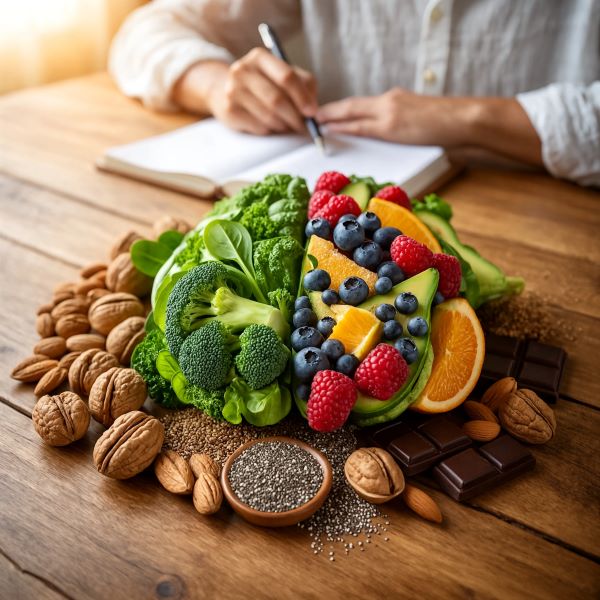
The Role of Nutrition: Eating for a Healthy Mind and Body

The Role of Nutrition: Eating for a Healthy Mind and Body

I used to view nutrition very simply for a long period. My assumption was that a good diet was mainly about keeping one physically healthy– having sufficient energy, being in good shape, and avoiding diseases. It did not cross my mind that nutrition does not only affect the body but also has deep effects on the mind like many individuals. I used to focus more on ease over quality most of the times. Convenience foods, quick processed meals, and irregular feeding schedule were part of my usual routine. Back then, I was not aware of the long-term consequences of it. But over time, I started feeling tired most of the times, not focused, and at some point emotionally low with no apparent reasons behind it.

It was my realization that food is not just the source of energy– rather information to the body and brain. The nutrients consumed have an impact on our way of thinking, feelings and performance. Once I started observing the types of food I consumed and its effects on my emotions and energy levels, I see evident connections. I realized that there were particular kinds of food that gave me high energy and concentration while others resulted in tiredness or lack of focus. Understanding this relationship made me look at myself differently. Nutrition became beyond just a health practice– it became an effective tool to enhance one’s thinking power, emotional stability, and general state of being well.

The Role of Nutrition: Eating for a Healthy Mind and Body Read More »

Harnessing the Power of Nature: Reconnecting with the Outdoors

Harnessing the Power of Nature: Reconnecting with the Outdoors

I spent many years not realizing how disconnected I was from nature itself. The days are so filled up with screens, our agendas, our deadlines, and constant notifications. I wake up inside, work inside, and rest indoors. And even during my short breaks most of which involved either staring at my phone or watching video on-line. I then started feeling mentally exhausted in a way that sleep alone could no longer cure. It was as if my head was overfilled, lacking concentration, and very low on motivation. Initially I thought that is probably part of today’s world life, something each person faces when trying to be productive and having self-improvement.

Harnessing the Power of Nature: Reconnecting with the Outdoors Read More »

The Importance of Sleep: Resting for Optimal Performance

The Importance of Sleep: Resting for Optimal Performance

I under-appreciated sleep’s value for quite some time. As individuals aiming at improvement we all think being productive is about using every waking moment productively. I would often remain up late in a bid to achieve certain objectives; whether through reading, planning for tomorrow, or setting out some plans, it was such a belief that losing sleep was going to mean success. Initially, it even felt right, like I was really producing something extra. I could just point to the additional hours and say to myself that I am in good position. But over some time, I started noticing disturbing trends: although I had put in longer working hours, my concentration kept on weakening, my drive lowered down, and not being able to make sensible decisions clearly. It was true: I wanted to enhance my performance but I was secretly undermining the basis on which performance was achievable.

The Importance of Sleep: Resting for Optimal Performance Read More »

Developing Patience: Cultivating Calm in a Fast-Paced World

Developing Patience: Cultivating Calm in a Fast-Paced World

Getting patience worked okay for most of my life— it just seemed like something I didn’t really have. I respected people who seemed naturally pretty chill– they didn’t get all tensed up if plans changed or waiting for results took a bit longer than expected. Meanwhile, I mostly lived with this sense of having to rush, like like time was just getting away from me. Every little delay got personal. Even every slow moment felt like wasting my chance. Getting older and trying to live in a fast-paced, kinda hyper-connected world just made me think patience wasn’t just waiting passively, being weak, or checking out— it’s actually some kind of inner work. Getting patient didn’t mean giving up on my goals or dropping expectations; it meant getting good at staying emotionally steady while actually working towards them.

When I started actually practicing patience, my whole thing with time totally changed. I got less reactive, more grounded, and way more ready when stuff didn’t go as planned. I saw I made better choices, got my communication right, and started feeling less overwhelmed by not knowing what’s going on. Having patience didn’t slow me down– it actually helped me do a better job. Instead of just rushing through life, I learned how to move with some intention and get calm, even when the world around me seems kind of crazy.

Developing Patience: Cultivating Calm in a Fast-Paced World Read More »

The Art of Decision Making: Choosing Wisely for Better Outcomes

The Art of Decision Making: Choosing Wisely for Better Outcomes

Getting into good decision-making, I used to think it was something you just get or maybe don’t get it. I watched out for confident people getting through life with what seemed easy, making choices fast and sticking by them without much hesitation. Meanwhile, I kinda doubted myself all the time. Every decision felt heavy, serious, and kind of full of potential regrets. I overthought little choices and put off big ones thinking that maybe taking a bad step would mess up everything I’d gotten ready for. That fear really didn’t just hold me back– it actually helped shape my whole identity. I started thinking of myself as indecisive, careful, and maybe unsure, but not really getting that being indecisive itself became one of my biggest habits.

What I finally got is that making decisions isn’t really about being smart, getting lucky, or showing your personality— it’s more about staying aware. It’s a thing that can be learned, practiced and even improved over time. When I actually started watching how I make decisions rather than judging myself for the results, things started to shift. I stopped waiting for perfect answers and started trying to get aligned, have some intentions, and take responsibility. Making good choices didn’t mean getting it all right; it meant getting it thoughtfully. Realizing this stuff changed how I deal with not just decisions, but also my attitude towards fear, getting confident, and working on myself.

The Art of Decision Making: Choosing Wisely for Better Outcomes Read More »

Scroll to Top