Emotions

Exploring Meditation: Techniques for Inner Peace and Clarity

Exploring Meditation: Techniques for Inner Peace and Clarity

Every time I actually attempted it, I got quite irritated since my thoughts never really stopped. Rather than feeling rather peaceful, I actually felt quite off track and very impatient. This was why I pretty much convinced myself that meditation “just wasn’t for me.” I assumed that people who really got into meditation quite easily were naturally much calmer, whilst my mind just seemed too overactive and restless – to ever benefit greatly from the practice itself.

Over the course of many years, however, I started hearing all sorts of things on how meditation could genuinely enhance our ability to concentrate, develop better emotional control, manage stress so much better, and even raise our level of self-awareness. Finally, I decided to approach it differently – instead of thinking of it as something I had to get perfect right away, but more like a practice for learning how to take things one step at a time and be a lot more aware of myself. That real change completely altered everything. I came to understand that meditation isn’t actually about eliminating your thoughts altogether; it’s more about figuring out how to notice them all – without getting way too overwhelmed by them. The more I practiced the more I noticed some subtle yet quite significant changes in my daily routine. I felt much calmer during those super stressful situations, a lot more present in conversation and also far better equipped to handle my emotions without overreacting totally. Meditation really started to become less of this regular exercise and more of a special tool for achieving that inner peace and sharper mental clarity itself

Exploring Meditation: Techniques for Inner Peace and Clarity Read More »

Navigating Life’s Transitions: Strategies for Smooth Changes

Navigating Life’s Transitions: Strategies for Smooth Changes

Life really doesn’t stay the same for very long time after time. At quite a few points in my life, I’ve seen changes happen that completely changed my schedules, outlook, and perception of stability all at once. A few transitions were quite exciting, such as beginning a whole new opportunity or entering a new phase of personal development. Others were very hard and utterly unexpected, forcing me to adjust a lot sooner than I really felt prepared. No matter what kind they took, one thing became really clear to me over time: transitions are absolutely inevitable. Change is part of life – whether we actually plan it ourselves or not at all.

For a rather long time, I really wrestled with transitions since I saw them more as problems rather than chances. I truly craved certainty, familiarity, and total control. Anytime something changed, I would often think a lot about what I was losing rather than what I might gain. My mindset really made transitions seem much weightier and even more stressful than they truly needed to be. But through experience, some reflection, and a ton of personal growth, I began to approach change in an entirely different way. I finally started to see that transitions aren’t just endings – they’re also beginnings itself. They put us to the test, transform us all over again, and sometimes really show us our inner strengths we never knew we had. Learning how to get through transitions much smoother became one of the most useful self-growth skills I’ve ever managed to develop.

Navigating Life’s Transitions: Strategies for Smooth Changes Read More »

The Role of Nutrition: Eating for a Healthy Mind and Body

The Role of Nutrition: Eating for a Healthy Mind and Body

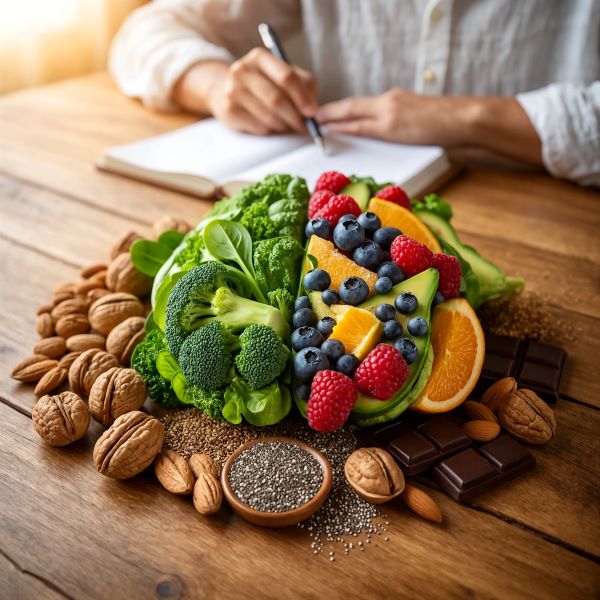
I used to view nutrition very simply for a long period. My assumption was that a good diet was mainly about keeping one physically healthy– having sufficient energy, being in good shape, and avoiding diseases. It did not cross my mind that nutrition does not only affect the body but also has deep effects on the mind like many individuals. I used to focus more on ease over quality most of the times. Convenience foods, quick processed meals, and irregular feeding schedule were part of my usual routine. Back then, I was not aware of the long-term consequences of it. But over time, I started feeling tired most of the times, not focused, and at some point emotionally low with no apparent reasons behind it.

It was my realization that food is not just the source of energy– rather information to the body and brain. The nutrients consumed have an impact on our way of thinking, feelings and performance. Once I started observing the types of food I consumed and its effects on my emotions and energy levels, I see evident connections. I realized that there were particular kinds of food that gave me high energy and concentration while others resulted in tiredness or lack of focus. Understanding this relationship made me look at myself differently. Nutrition became beyond just a health practice– it became an effective tool to enhance one’s thinking power, emotional stability, and general state of being well.

The Role of Nutrition: Eating for a Healthy Mind and Body Read More »

Developing Patience: Cultivating Calm in a Fast-Paced World

Developing Patience: Cultivating Calm in a Fast-Paced World

Getting patience worked okay for most of my life— it just seemed like something I didn’t really have. I respected people who seemed naturally pretty chill– they didn’t get all tensed up if plans changed or waiting for results took a bit longer than expected. Meanwhile, I mostly lived with this sense of having to rush, like like time was just getting away from me. Every little delay got personal. Even every slow moment felt like wasting my chance. Getting older and trying to live in a fast-paced, kinda hyper-connected world just made me think patience wasn’t just waiting passively, being weak, or checking out— it’s actually some kind of inner work. Getting patient didn’t mean giving up on my goals or dropping expectations; it meant getting good at staying emotionally steady while actually working towards them.

When I started actually practicing patience, my whole thing with time totally changed. I got less reactive, more grounded, and way more ready when stuff didn’t go as planned. I saw I made better choices, got my communication right, and started feeling less overwhelmed by not knowing what’s going on. Having patience didn’t slow me down– it actually helped me do a better job. Instead of just rushing through life, I learned how to move with some intention and get calm, even when the world around me seems kind of crazy.

Developing Patience: Cultivating Calm in a Fast-Paced World Read More »

The Art of Decision Making: Choosing Wisely for Better Outcomes

The Art of Decision Making: Choosing Wisely for Better Outcomes

Getting into good decision-making, I used to think it was something you just get or maybe don’t get it. I watched out for confident people getting through life with what seemed easy, making choices fast and sticking by them without much hesitation. Meanwhile, I kinda doubted myself all the time. Every decision felt heavy, serious, and kind of full of potential regrets. I overthought little choices and put off big ones thinking that maybe taking a bad step would mess up everything I’d gotten ready for. That fear really didn’t just hold me back– it actually helped shape my whole identity. I started thinking of myself as indecisive, careful, and maybe unsure, but not really getting that being indecisive itself became one of my biggest habits.

What I finally got is that making decisions isn’t really about being smart, getting lucky, or showing your personality— it’s more about staying aware. It’s a thing that can be learned, practiced and even improved over time. When I actually started watching how I make decisions rather than judging myself for the results, things started to shift. I stopped waiting for perfect answers and started trying to get aligned, have some intentions, and take responsibility. Making good choices didn’t mean getting it all right; it meant getting it thoughtfully. Realizing this stuff changed how I deal with not just decisions, but also my attitude towards fear, getting confident, and working on myself.

The Art of Decision Making: Choosing Wisely for Better Outcomes Read More »

The Role of Sleep: How Rest Impacts Your Motivation

The Role of Sleep: How Rest Impacts Your Motivation

Before, I thought little of sleep, really. For ages I believed motivation was all about discipline, mindset, or maybe a background YouTube video pushing me through another late-night grind. The idea? I reckoned if I just pushed hard enough, I could beat feeling tired. Really thinking exhaustion was merely a feeling— something conquerable with sheer willpower. But in time I discovered that despite thinking myself quite mentally tough, my body had definite limits. When I lack sleep, no amount of discipline, caffeine, or even inspirational quotes can make my mind function optimally. Back then I did not comprehend that motivation does not exist independently— it relies on good physical health, a clear head, stable emotions, and adequate rest. In fact all these things depend upon something very simple but enormously important: sleep itself!

Paying attention to my sleep patterns showed me just how deeply they affected my energy levels; key to any plan— and also your willingness to take on challenges. Observations: When well-rested tasks appeared more manageable– such as making decisions (or having control over one’s emotions), being creative or even feeling interested in activities normally enjoyed– although difficult without sufficient rest. Even minor jobs became like mountains that blocked my path; I’d put things off (procrastinate), mull over them too much (overthink), or feel incapable of coping with everything piling up at once (overwhelmed).

The Role of Sleep: How Rest Impacts Your Motivation Read More »

Navigating Setbacks: Strategies for Bouncing Back Stronger

Navigating Setbacks: Strategies for Bouncing Back Stronger

At times life will throw curve balls when you least expect it; such as losing a job, relationship issues, feeling stuck in life goals, or just random awful stuff happening. There is nothing more disheartening than these abrupt events making us feel helpless and uncertain of the future– but with time one realizes setbacks offer growth opportunities. They aren’t failure markers but moments to realign yourself; bounce back stronger and more determined than ever before.

Instead of seeing them as problems, recognize that overcoming difficulties builds strength— something we all need lots of if life gets tough! The most painful experiences taught me the most. I had no idea then how much those bad times would help me. It was just annoying and upsetting back then. However, after some reflection, I realized that every failure gave me a better understanding of myself– things like my inner strength and determination (and sometimes also my shortcomings). This self-awareness made me grow in terms of feelings, thoughts, and spirituality.

This write-up will disclose some tactics that have enabled me to make a speedy recovery from tough situations. My intention is that these insights may be of assistance to you during difficult moments so that you emerge even stronger.

Navigating Setbacks: Strategies for Bouncing Back Stronger Read More »

Scroll to Top